
Wallpaper or paint: which is right for the room
An honest comparison of cost, durability and preparation for wallpaper against paint, room by room, from someone who fits both.
We hang paper and we paint, so there is nothing to sell you either way. The right answer depends on the wall, the room and how long you want it to last.
Cost, honestly
For a single feature wall in an average bedroom, paint is cheaper on the day. Two coats over sound plaster is half a day's labour and one tin.
Paper is a different shape of cost. The labour is comparable for a plain paper, but the material varies enormously. A mid-range paper runs £40 to £70 a roll and an average feature wall takes three. Hand-printed and panoramic papers can be £120 a roll and up.
Over ten years the gap narrows. A good painted wall in a busy hallway wants refreshing every four or five years. A well-hung heavy vinyl or grasscloth in the same hallway is often still fine at ten.
Preparation is where paper is unforgiving
Paint is tolerant. Small imperfections disappear under matt emulsion, and a bad patch can be filled and touched in without anyone noticing.
Paper shows everything and forgives nothing.
- Walls have to be sound, dry and flat. Any nib or lump telegraphs straight through.
- Most walls need lining first, and difficult ones need cross-lining, which is another day.
- Walls must be sized so the paper can be positioned before it grabs.
- The pattern has to be set out from the focal point before the first drop goes up. Getting that wrong is not fixable halfway along a wall.
This is why a paper quote often looks high next to a paint quote. Two thirds of it is the days before the paper goes near the wall.
Paint hides a multitude of sins. Paper points at every one of them.
Room by room
Hallways and stairs
Heavy traffic, bags, bikes and shoulders against the wall. Washable matt paint wins for most families, because it can be wiped and touched in. A durable vinyl paper is the alternative if you want pattern and are prepared to pay for it.
Bedrooms
Either works. This is where paper earns its keep, because the wall is largely undisturbed and you get pattern and texture that paint cannot give you. A single papered chimney breast with the other three walls painted is the most common thing we fit, and the cheapest way into it.
Living rooms
Depends on the light. A big south-facing room takes a bold paper well. A darker room often does better with a strong paint colour, because heavy pattern in low light makes a room feel smaller.
Kitchens and bathrooms
Paint, in almost every case. Steam and temperature swings will lift paper at the seams eventually, whatever the maker claims. If you want pattern in a bathroom, keep it well away from the shower and accept it is not forever.
Rented and resale
Neutral paint. It is cheaper to change, and the next person is far more likely to like it. A distinctive paper is a personal choice and reads as one to a buyer.
The two failures we get called out to fix
Paper hung over a wall that was not ready. Bubbles, lifted seams, and the pattern drifting off plumb because the wall was not lined. Once it has gone up wrong the only fix is stripping it and starting again, so the cheap job becomes the expensive one.
Paint straight over old textured coating or unstable distemper. It looks fine for a fortnight, then it flakes. Textured coating has to come off or be skimmed first, and distemper has to be washed off and sealed. Neither is quick, and there is no shortcut.
A practical middle route
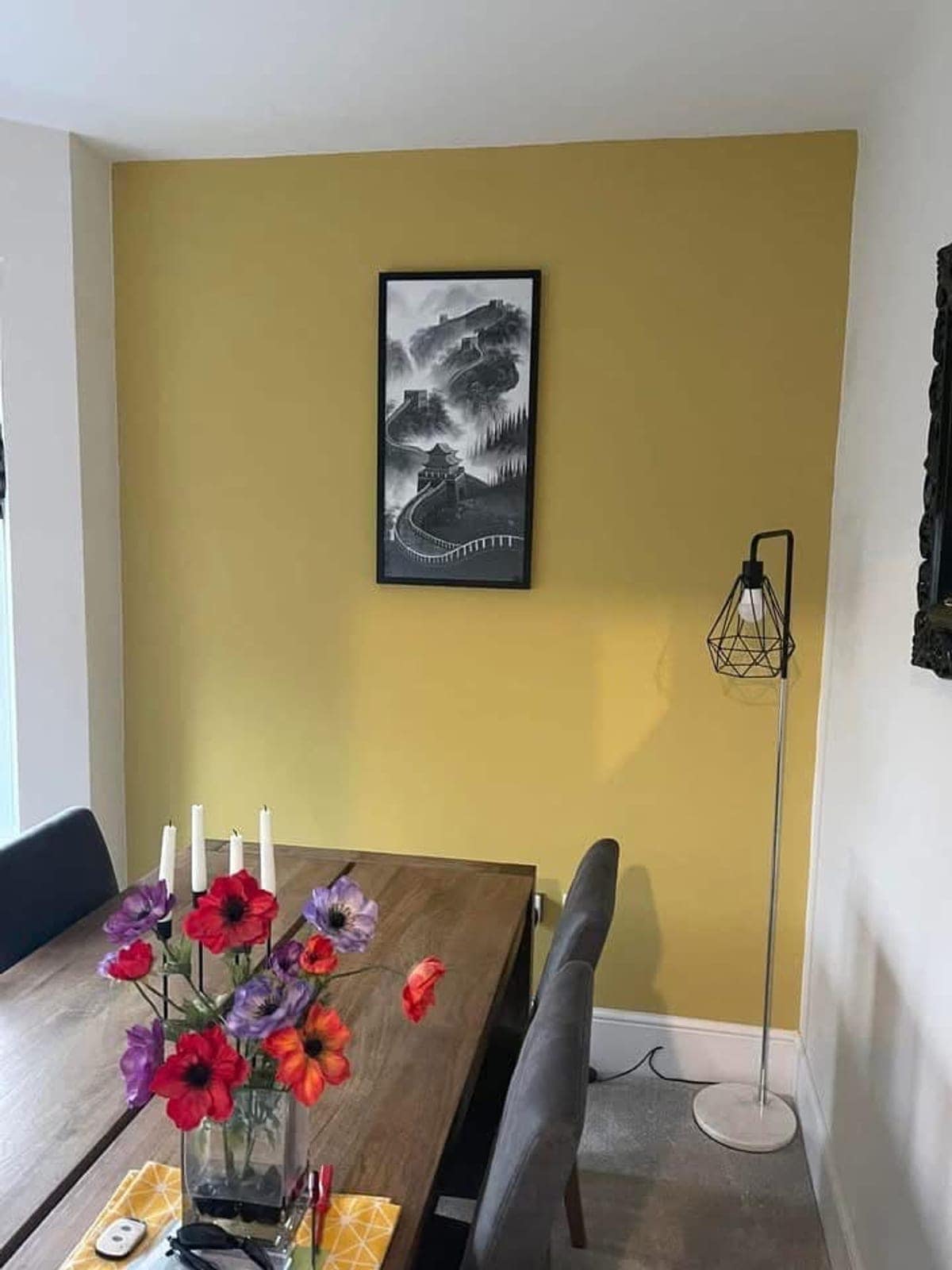
Most of our customers land in the same place: paint everywhere, one papered wall in the room where it will be looked at, and the woodwork tying the two together. It costs noticeably less than papering a whole room, it is easy to change in five years, and it gives the room something to be about.
If you are weighing it up for a specific room, send a photograph and the dimensions. We will tell you what each would cost and which one we would do in our own house.