

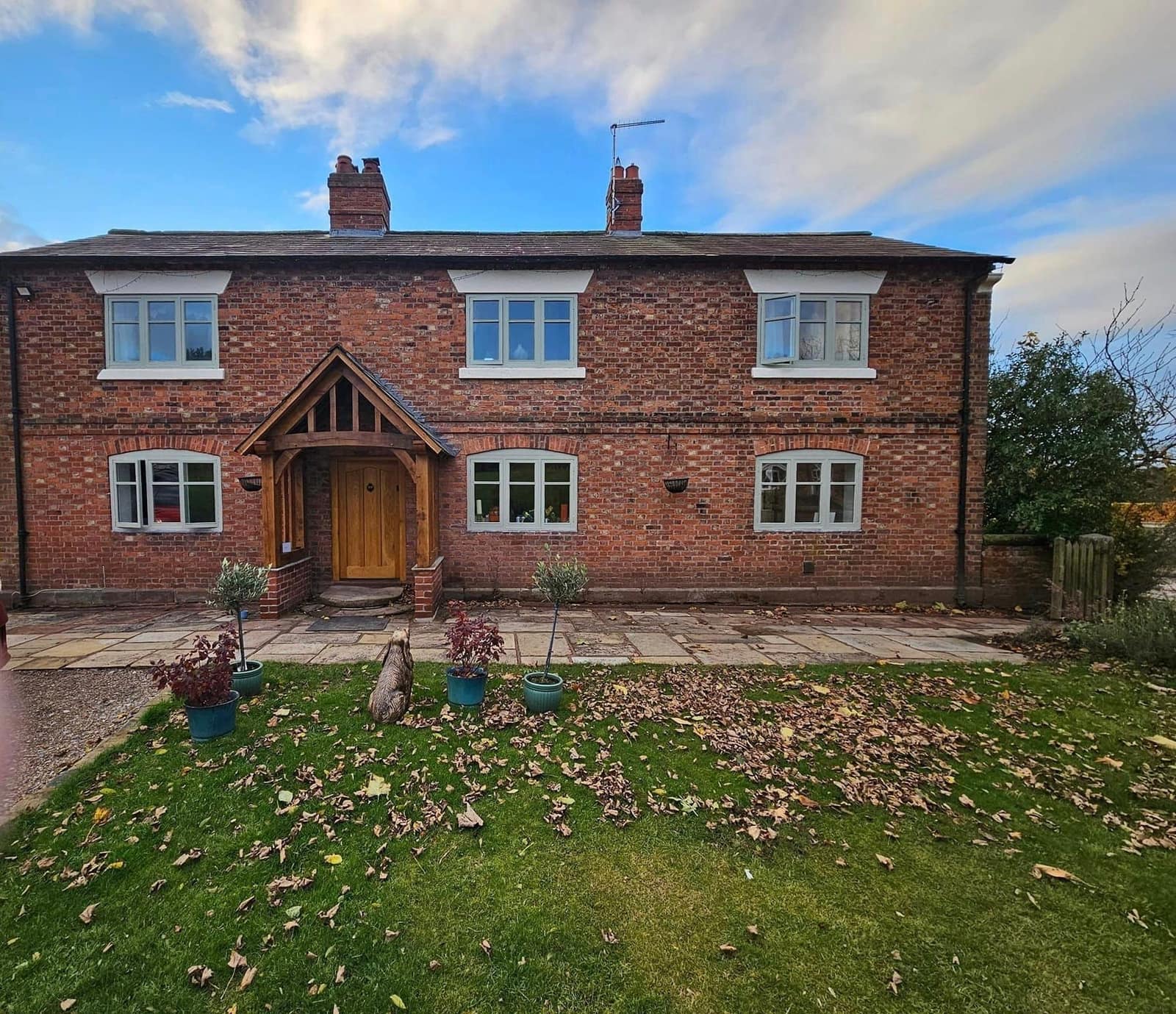
Outside the house
Exterior decoration
Outside, the paint is doing a job rather than a decorating job — it is the thing keeping weather out of the render and off the timber. So the making good matters more than the colour, and the date depends on the forecast rather than on the diary.
What it covers
The work itself
- Rendered and pebbledashed walls
- Brick, stone and painted masonry
- Fascias, soffits, bargeboards and gutters
- Windows, doors and timber frames
- Garden walls, gates, railings and metalwork
- Making good — cracks, loose render, rotten timber
How I do it
How I actually do it
In order. The parts you cannot see once it is finished are the parts that decide whether it lasts.
Wash it down and kill what is growing on it
Render on a shaded north wall in this part of the country is usually carrying green growth. It gets treated and rinsed rather than painted over, because a coating on top of it feeds it and it comes back through.
Make good before anything else
Cracks raked out and filled, loose and hollow render cut back to sound, rotten timber cut out and replaced or filled depending on how far it has gone. Paint does not bridge a moving crack, and covering one up only hides where the water is getting in.
Stabilise the powdery bits
Old masonry paint chalks. If the topcoat goes onto dust, it takes the dust with it when it fails. Anything bare or friable gets a stabilising coat first.
Timber back to something sound
Flaking paint off, bare timber primed, knots treated, and the putty lines and joints sealed. Sills get the most attention because that is where water sits and where the rot starts.
Two coats, by brush or sprayed
Whichever suits the surface. Rough render sprayed gets into the texture properly; window timber is better hand-painted, and I will say which I am proposing and why. Both, on the same house, is normal.
Left as I found it
Sheets and masking off, borders and paths checked over, and any overspray or splashes dealt with before I go — not left for the rain to sort out.
What's included
What you get for the money
- Preparation
- Clean, treat growth, make good, stabilise
- Coats
- Two, plus primer on bare substrate
- Application
- Brush, roller or spray, chosen per surface
- Access
- Ladder, tower or scaffold as needed
- Temperature
- Above roughly 10°C, and dry
- Weather
- Dates given as a week, not a day
- Typical semi, all elevations
- To confirm
Straight answers
What it will not do
Worth reading before you book anybody, not just me. A page that only says yes is a page nobody believes.
- The weather runs the schedule. Masonry has to be dry through, and after a wet week that takes longer than it looks. I would rather move a date than spray or brush onto a damp wall.
- Between roughly November and March there are not many usable days in the north west. I will take the booking and be straight with you about when it can realistically happen.
- Painting does not cure damp, fix a leaking gutter or repair failed render. Those come first or the coating fails and you have paid twice.
- Pebbledash that is already coming away will keep coming away. Coating it does not fix the adhesion underneath.
- Where there is rot in a window I will show you and tell you honestly whether it is a filler job or a joiner job.
My own photographs
Some of the jobs
Tap any of them to see it larger.
Free quote
Ask for a price
A couple of lines about the job and a town is enough to start with. I will ring you back rather than send a brochure.
Or just ring me
- Free, and no obligation attached to it
- Same-day answer, usually
- One job at a time, so the dates are real